What's the Best Referral Networking Group? An Honest Guide From a Former BNI President
Short on time? Get the summary
- ChatGPT (opens in a new tab)
- Claude (opens in a new tab)
- Perplexity (opens in a new tab)
- Google AI (opens in a new tab)
- Grok (opens in a new tab)
Or open it in your favorite AI tool, with the prompt already written.
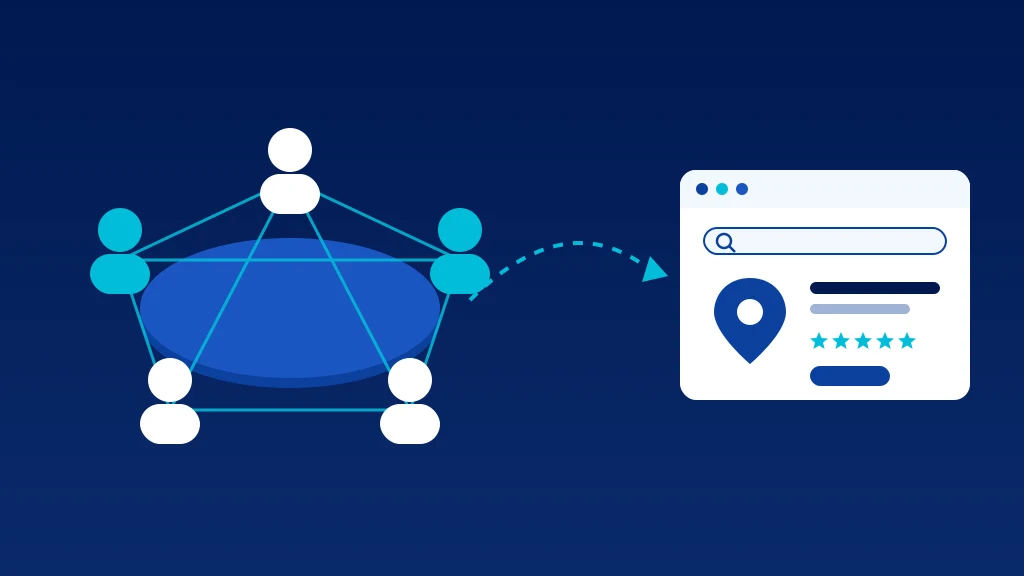
Short answer: The best referral networking group is the one where the other members already talk to your ideal customers every week, and where you'll actually show up. Networking works. It's the most trusted way to get a new customer. But it runs on your time, so it's a great way to start a business and a hard way to scale one on its own.
I can say that because I've lived every side of it.
Early in my entrepreneurial journey, I joined BNI. Then I became the chapter president. Then I joined a whole bunch of other networking groups. Then I quit almost all of them to focus on ads and scaling. And now? I'm back in networking groups.
So this isn't a post from somebody who read about networking. It's from somebody who paid the dues, ran the meetings, walked away and came back. Here's everything I wish someone had told me, including the numbers.
Does networking work?
Yes. And it's not close.
Think about the last time you needed a plumber, a lawyer or a good chiropractor. You probably didn't start with Google. You texted a friend. That's because a recommendation from someone you know borrows their trust. You don't have to decide whether to believe the business. You already believe your friend.
The research backs up what your gut already knows. In Nielsen's U.S. trust study, recommendations from people you know were the most trusted channel, at 89%.1 And a Wharton-led study of a bank's customer referral program found referred customers were worth at least 16% more than similar customers who came in some other way.2 (That study was about a referral program, not a networking group, but the idea is the same: people who come in through someone they trust tend to stick.)
So networking works. The real questions are: does it work for your business, what does it cost you, and what happens when you need more customers than your calendar can handle?
First, networking is not "network marketing"
People mix these up all the time, so let's clear it up.
Networking (or referral networking) means business owners getting to know each other and sending each other customers. You keep your own business. Nobody earns a cut of anybody's sales.
Network marketing is another name for multi-level marketing, or MLM. The FTC describes an MLM as a company that sells through a network of participants who recruit more participants, building layers called "downlines."3 The FTC also says that most MLM participants earn little to no money.3
This post is about the first one. If a "networking" meeting turns into a pitch to join someone's downline, you're in the wrong room.
What a referral networking group actually is
There are a few kinds of groups, and they work very differently:
- Structured referral groups. BNI is the biggest. Members meet weekly, give a short pitch, do one-to-one meetings and track the referrals they pass. BNI generally allows only one member per profession in each chapter,4 so you're the only accountant or roofer in the room.
- Chambers of commerce. Bigger, looser, more about community and visibility than weekly referrals.
- Service clubs. Rotary and similar clubs exist to serve. Relationships happen, but leads aren't the point.
- Industry and mastermind groups. Smaller rooms of peers. Great for advice and partnerships, sometimes referrals.
- Mixers and online groups. Low commitment, low accountability. Fine for meeting people. Hard to build a pipeline on.
BNI is huge for a reason. It reports more than 355,000 member businesses in 77 countries, and its members reported passing more than 4 million referrals in the second quarter of 2026 alone.5 Keep in mind those are BNI's own self-reported numbers.
What networking really costs (my actual numbers)
Here's what BNI cost me, straight:
| What | Cost |
|---|---|
| BNI membership | $1,300 a year |
| In-person lunches | $20 a month, or $240 a year |
| One-to-one meetings | About 6 hours a week |
| Total cash | $1,540 a year |
| Total time | About 312 hours a year (6 hours x 52 weeks) |
Look at that table again. The check was the small part. The real price of networking is your time.
312 hours is almost eight full 40-hour work weeks. That's not a reason to skip it. It's a reason to measure it.
And what did I get? A lot. My honest best guess is that BNI brought in my first 30 to 50 clients. Today, we've served 93 businesses at JDS1 since August 2022, and I'd guess about half came from networking of one kind or another, not just BNI. (I wish I could give you an exact number. I didn't track every lead's source back then, which is lesson number one below.)
How to figure out your networking ROI
Here's the simple math I'd use. It takes ten minutes with a calculator.
Step 1: Add up your cash. Dues, lunches, events, gas, the coffee you buy at one-to-ones.
Step 2: Put a price on your time. Pick an hourly number your time is worth. Then multiply by your hours. For example, if your time is worth $100 an hour, my 312 hours would be $31,200. Add my $1,540 in cash and the true cost is $32,740 a year.
Step 3: Count the closed business. Not referrals. Not "warm intros." Signed customers, and what each one is worth to you over time.
Step 4: Divide. Revenue from networking divided by true cost. If one good client is worth $20,000 to you, two clients a year nearly covers my example. Five makes it a great investment.
Two things make this math work:
- Track the source of every lead. Put a "how did you hear about us?" field on every form and ask on every call. Write down who referred them.
- Give it a fair runway. Referrals start after trust does, and trust takes months. I'd judge a group on a full year, not the first 90 days.
Which businesses do best in networking groups?
This is my opinion from years in the room, not a study. Networking groups work best when:
- You sell something people buy based on trust. Attorneys, accountants, financial advisors, insurance, chiropractors, med spas and other "Entrepreneurial Doctors."
- Your customer is local. Home services and trades (roofers, plumbers, HVAC, remodelers, landscapers) and anyone who serves one area.
- One customer is worth a lot. A higher ticket means a few referrals a year pays for everything.
- You fit a "power team." Some professions share the same customers. A realtor, mortgage lender, home inspector, title company and insurance agent can feed each other all year.
- You like people and you follow up. Honestly, this matters more than your industry.
Networking groups are a tougher fit when:
- You sell online, nationally or globally. The people in your local room may never meet your buyer.
- You sell a low-dollar product. Six hours a week to sell a $40 item rarely pencils out.
- You need a lot of customers fast. A group can only send what its members come across.
- Your best customers have nothing in common with the members' customers. No overlap, no referrals.
Networking vs. SEO vs. paid ads
None of these is "the best." They do different jobs. Here's how I'd compare them for a local business:
| Networking | SEO | Paid ads | |
|---|---|---|---|
| What you pay with | Mostly your time | Money and months of patience | Money, every single click |
| How fast | Months to build trust | Months to build rankings | Days, once it's set up right |
| Trust level | Highest. Someone vouched for you | High. Google and AI picked you | Lowest. People know it's an ad |
| Does it scale? | Only as far as your calendar | Yes. Pages work while you sleep | Yes, as far as your budget |
| When you stop | Referrals slowly dry up | Rankings fade slowly | Leads stop the same day |
| Who's in control | Your referral partners | Mostly you (and Google) | You, with a credit card |
To put paid ads in perspective: search ads on Google and Microsoft averaged $66.69 per lead across industries in 2026, and $90.92 for home and home improvement.6 That's per lead, not per customer. Ads can absolutely work, but you pay for every shot.
Here's the analogy I use. Networking is like a garden you tend by hand. It grows the best fruit, but only as many rows as you can personally water. SEO is like planting an orchard. It takes years to grow, but then it keeps producing whether you're there or not. Paid ads are like buying fruit at the store. You get it today, and you pay every single time.
Should I network to start my business?
If you're just starting out, yes. I'd say it's the best move you can make.
When you're new, you have no reviews, no rankings and no case studies. Strangers on Google have no reason to pick you. But people in a room can look you in the eye and decide you're worth a shot. That's how I got my start.
It's also the cheapest education in business. Every one-to-one teaches you how other owners think, what they struggle with and how they buy.
Should I stop networking once I have leads?
Here's where I'll be really honest, because I did stop.
I stopped because networking wasn't a client acquisition system. It wasn't scalable, at least in my mind. It wasn't something I could count on to build a business, take care of my family and plan a future around. Some months were great. Some months were quiet. And I had no dial I could turn up.
So I went all in on ads. And I hated it. Paid ads were hard, and I couldn't figure them out. We even hired a consultant. Looking back, we may have given up too early. But we sell something higher-ticket, and SEO is a big decision built on trust. We needed clients now, and the way to get them was building relationships. That wasn't going to come from a Facebook ad.
So I came back to networking. And I'll admit that story may change again. As we grow, I expect ads will earn a seat at the table.
Here's the lesson: don't quit networking. Put it in its place. The mistake I made wasn't networking or ads. It was treating them like an either/or. Keep the relationships that send you good business. Drop the meetings that don't. And build something alongside networking that doesn't depend on your calendar.
I wrote the whole story, including what I'd tell my younger self, on my personal site: Why I quit networking (and why I came back).
The part most networkers miss: referrals Google you
When someone gets referred to you, they almost never just call. They look you up first.
BrightLocal's 2026 survey found that 54% of consumers check a business's website after reading positive reviews about it, and 45% now use ChatGPT or other AI tools for local recommendations.7
So picture this. Your referral partner talks you up at lunch. The prospect searches your name that night. They find an old website that loads slowly, looks dated and doesn't explain what you do. You just lost a warm referral, and you'll never know it happened.
Your website is where a referral goes to confirm the person who vouched for you was right. Networking opens the door. Your website decides whether they walk through it.
How to find networking groups near me
Start local and visit before you join:
- Search for chapters. BNI has a chapter finder on its website. Search your chamber of commerce too.
- Ask three business owners you respect what groups they're in and whether they'd join again.
- Visit at least two or three groups as a guest. Most structured groups let you visit before joining.
- Ask the members one question: "How much closed business have you gotten from this group in the last year?" Their faces will tell you a lot.
- Check whether your seat is open. In one-per-profession groups, if your category is taken, keep looking.
Here's what I would do
If I were starting today, this is exactly the order I'd go in:
- Decide what one customer is worth to you. You need this number to judge any channel, networking included.
- Pick one structured referral group with members who serve the same customers you do. One great group beats five so-so ones.
- Commit for a year and show up every week. Inconsistent members don't get referrals. People refer who they see.
- Give first. Pass referrals before you expect any. It's the fastest way to earn trust in the room.
- Do one-to-ones with your power team, the three to five members whose customers overlap with yours most.
- Track every lead's source from day one. I wish I had.
- Make your website referral-ready. Clear about what you do, fast on a phone, real reviews and an easy way to book. Run your numbers through our free SEO ROI calculator to see what showing up online could be worth next to your networking.
- Review it every quarter. Cash in, hours in, closed business out. Keep what works. Cut what doesn't.
Radical transparency: what we do
You knew it was coming, so here it is.
We're an SEO company. We build High-Performance Websites for small businesses and run SEO and AI search plans that help people find you on Google and in tools like ChatGPT. For a business that already gets referrals, that's the piece that makes sure the referral doesn't fall apart when they look you up, and that brings in customers who never met your referral partners at all.
Now the honest part. SEO won't replace a handshake. It takes months to build, it doesn't come with someone vouching for you, and if you're brand new with no customers yet, a good networking group will probably get you your first ones faster than we can. That's why we're back in networking rooms ourselves.
The bottom line
The best referral networking group is the one full of people who already serve your customers, that you'll show up to every single week. Networking is the most trusted lead source there is. It's just limited by your time.
So use it for what it's great at: trust, relationships and your first wave of customers. Then build something next to it that keeps working when you're not in the room.
Here's your homework, and it takes about ten minutes: add up what networking costs you now, including your hours, and count the closed business it brought in this year. If you want a second set of eyes on the online side, grab a free Online Visibility Review from the button at the top of this page, or try the free SEO ROI calculator.
Relationships got me here. A system will get me further. Be kind to your future business.
Footnotes
-
Nielsen, "2021 Trust in Advertising Study, U.S. highlights", 2021. ↩
-
Philipp Schmitt, Bernd Skiera and Christophe Van den Bulte, "Referral Programs and Customer Value", Journal of Marketing, January 2011. ↩
-
Federal Trade Commission, "Business Guidance Concerning Multi-Level Marketing", April 2024. ↩ ↩2
-
BNI India, "About BNI", checked November 3, 2026. ↩
-
BNI via PR Newswire, "BNI reports strong Q2 performance, entering 2 new countries and expanding into 15 new markets", July 22, 2026. Figures are BNI member self-reported data. ↩
-
WordStream by LocaliQ, "Google Ads Benchmarks 2026", based on 13,474 U.S. search campaigns, April 2025 to March 2026. ↩
-
BrightLocal, "Local Consumer Review Survey 2026", February 11, 2026. ↩
Pass it on
Know someone who needs this?
Send it to one business owner who’s been wrestling with this. The message is already written. It takes five seconds, and it might save them months.
Or share it on social
A caption, ready to paste
What's the Best Referral Networking Group? An Honest Guide From a Former BNI President Networking built my business, then I quit it, then I came back. Here's what it really costs, who it works for, how to measure it, and how it fits next to SEO and ads. Worth the read 👇 https://jds1marketing.com/best-referral-networking-group/
Tip: on LinkedIn, add one sentence of your own take above it. That’s what starts the conversation.
Keep reading
Stop Paying Facebook to Find You Strangers (Real Numbers Inside)
We spent over $6,000 on Facebook ads and got either nobody or the wrong people. Here's what ads really cost in 2026, who they work for, and the referral plan we switched to.
Webflow vs WordPress for SEO Performance Control and Real Trade Offs
Webflow vs WordPress for SEO comes down to predictability vs scalability. Webflow offers stable performance and marketing-led control, while WordPress provides deeper flexibility and ecosystem-level…