Your 2027 Marketing Plan: Why the 4 P's and 4 C's Still Beat Any AI Tool
Short on time? Get the summary
- ChatGPT (opens in a new tab)
- Claude (opens in a new tab)
- Perplexity (opens in a new tab)
- Google AI (opens in a new tab)
- Grok (opens in a new tab)
Or open it in your favorite AI tool, with the prompt already written.
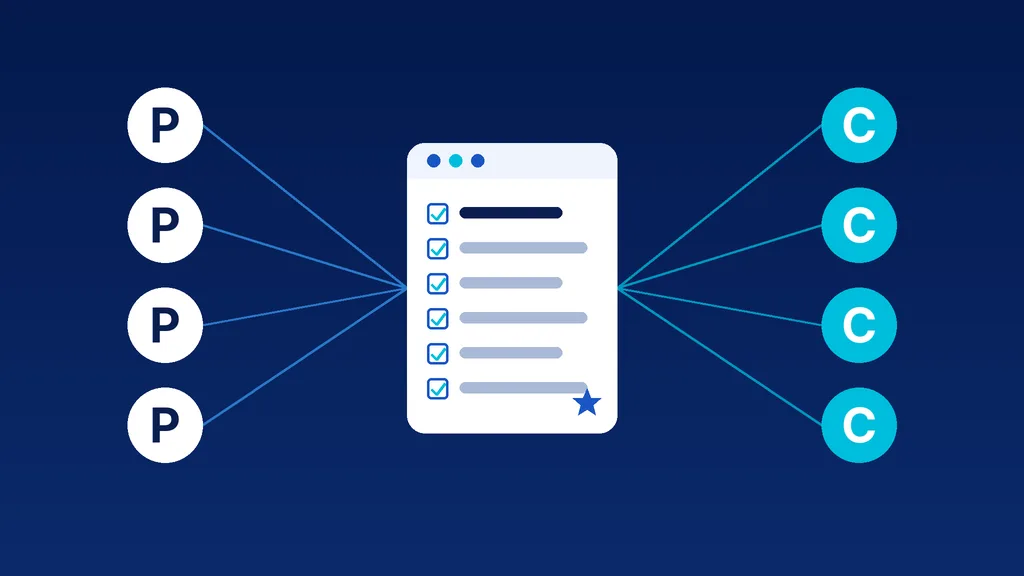
Short answer: A good 2027 marketing plan starts with the same eight questions that have worked for decades: the 4 P's (what you sell, what you charge, where you sell it, how you promote it) and the 4 C's (what your customer wants, what it really costs them, how easy you are to buy from, and how you talk with them). Answer those first. Then use AI to do the work faster. AI is the tool. The thing is still the thing.
Here's what I keep seeing. A business owner tells me they need "an AI strategy." So I ask a few simple questions. Who's your best customer? What do they search for when they need you? Why would they pick you over the guy down the street?
And the room goes quiet.
That's not an AI problem. That's a marketing problem. And the fix is older than the moon landing.
What a good 2027 marketing plan really needs
Look at those McKinsey numbers again. Nearly nine in ten organizations use AI regularly. Eight in ten people say it makes them more productive. But only 37% can point to any bottom-line impact, and that number didn't move from last year.1
So almost everybody has the tool. Very few are getting paid for it.
The small group that is winning (about 6%) does something different. They don't just sprinkle AI on top of what they already do. Nearly three in four of them have redesigned how the work gets done, compared with about one in four everyone else.1 In plain English: they figured out the plan first, then pointed the tool at it.
That's the whole idea of this post. Your 2027 marketing plan doesn't start with which AI tool to buy. It starts with eight questions. They've been around for 66 years, and AI didn't make them less important. It made them more important, because AI will happily help you do the wrong thing faster.
A quick history of the 4 P's and 4 C's
This stuff didn't come from a LinkedIn guru. It came from Harvard and a couple of marketing professors who were trying to make marketing teachable.
1948: the "mixer of ingredients." A Harvard professor named James Culliton described a business executive as a "mixer of ingredients," someone who sometimes follows a recipe and sometimes invents one.2
Late 1940s to 1964: the "marketing mix." His Harvard colleague Neil Borden loved that idea. If the executive is a mixer, then what they design is a mix. Borden started using the phrase "marketing mix" in his teaching in the late 1940s and wrote up the full concept in 1964. His mix had twelve ingredients, including product planning, pricing, branding, advertising and personal selling.2
1960: the 4 P's. Twelve is a lot to keep in your head. E. Jerome McCarthy boiled the mix down to four in his textbook Basic Marketing: A Managerial Approach: Product, Price, Place and Promotion.3 That book went on to a 19th edition. The 4 P's stuck because you can remember them in a meeting.
1990: the 4 C's. Thirty years later, Bob Lauterborn wrote a column in Advertising Age with a headline that basically said the 4 P's were passé.4 His point: the P's are how the seller sees the world. Customers don't think in P's. So he flipped each one around:
| The 4 P's (how you see it) | The 4 C's (how your customer sees it) |
|---|---|
| Product: what you sell | Consumer: what they actually want and need |
| Price: what you charge | Cost: everything it costs them to buy, including time, hassle and risk |
| Place: where you sell it | Convenience: how easy you are to find and buy from |
| Promotion: how you advertise | Communication: a two-way conversation, not a megaphone |
The C's didn't replace the P's. They're two sides of the same coin.
Why it stood the test of time: it's psychology, not tactics
Here's why a framework from the Eisenhower years still works in the age of ChatGPT. It's not about tools. It's about people. And people haven't changed much.
Think of it like a handshake. The 4 P's are your hand. The 4 C's are their hand. Marketing is the moment the two meet.
- Product vs. Consumer. You think you sell "roof replacement." Your customer is buying "I don't want water in my kid's bedroom again." Same job, totally different words. The words they use are the words they search for.
- Price vs. Cost. Your price is $12,000. Their cost is $12,000 plus three quotes, two days off work, a fear of getting ripped off and a spouse who needs convincing. Lower the cost and the price matters less.
- Place vs. Convenience. You think your "place" is your office. In 2027, their convenience is a Google search, a map listing, a ChatGPT answer and a "book now" button that works on a phone at 10 p.m. BrightLocal found 45% of consumers now use AI tools for local recommendations.5 If you're not there, you're not convenient.
- Promotion vs. Communication. Promotion is you talking. Communication is them talking back: reviews, questions, comments, the "how did you hear about us?" box.
Tactics come and go. Yellow Pages, then websites, then Facebook, then TikTok, now AI search. The questions underneath never changed. That's why the framework outlived every one of those tactics.
Why people skip it (and chase AI instead)
I get it. The 4 P's sound like homework from a college class you took twenty years ago. AI sounds like the future.
Here's why people skip the basics:
- Tools feel like progress. Signing up for a new AI tool feels productive. Sitting with a blank page asking "who exactly is my customer?" feels like nothing is happening.
- AI makes tactics cheap. You can now write 50 blog posts, 200 social posts and 10 ad variations before lunch. When doing stuff is free, it's tempting to skip deciding what to do.
- Everyone else is doing it. When nearly nine in ten organizations are using AI,1 not using it feels like falling behind.
- The basics are uncomfortable. The 4 C's make you look at your business through your customer's eyes. Sometimes what you see isn't flattering.
But here's the catch. When everyone has the same AI tools, the tools stop being an advantage. What's left is the thinking. AI is the scalpel. You still need a surgeon. A scalpel in the wrong hands doesn't make an operation go better. It makes it go wrong faster.
How we use the 4 P's and 4 C's before we design anything
A mentor of ours taught us this, and it changed how we build websites.
Most web designers start a project by asking: What colors do you like? What fonts? Can you send your logo?
We don't start there. Before anybody opens a design tool, we ask the 4 P's and the 4 C's. What do you sell, what do you charge, where do you sell it, how do you promote it? And then the other side: who's your customer, what's it really cost them to choose you, how easy are you to buy from, and how do they talk to you?
Then the design becomes a blend of your P's and their C's. The colors, the photos, the headline, the button, where the phone number goes... all of it falls out of those answers. That's why I'd put our process up against almost anyone's. Not because we're better at picking colors. Because we ask better questions first, then use AI to build faster.
The one-page 2027 marketing plan template
Here's the template. One page. Eight questions, then six decisions. Grab a notebook or open a doc and fill it in.
Part 1: Answer the 8 questions
| Your answer | |
|---|---|
| Product: What do you sell, in one sentence? | |
| Price: What do you charge, and how does that compare to competitors? | |
| Place: Where can people find and buy from you today? | |
| Promotion: How do people hear about you today? | |
| Consumer: Who's your best customer, and what problem are they really trying to solve (in their words)? | |
| Cost: What does it cost them to choose you, besides money? Time, risk, hassle? | |
| Convenience: How many steps from "I need this" to "I booked"? | |
| Communication: Where do your customers talk back? Reviews, calls, DMs, email? |
Part 2: Turn the answers into a strategy
A marketing strategy is just six decisions. Your 8 answers make each one:
- Who: the one customer you're going after this year (from Consumer).
- Message: the promise, in their words, not yours (from Product + Consumer).
- Platform: where they already look. Google search, the map pack, AI search, referrals, LinkedIn or somewhere else (from Place + Convenience).
- Volume: how much and how often. For example: one helpful article a week, five new reviews a month (from Promotion + Communication).
- Offer: your price story and the easiest first step (from Price + Cost).
- Tracking: the one number you'll check every month. Calls, booked jobs, cost per lead.
That's it. If it doesn't fit on one page, it's not a plan yet. It's a wish list.
Want a head start? Answer the eight questions in our free 2027 Marketing Plan Generator and get a one-page plan made for your business in about three minutes.
And writing it down matters. CoSchedule's survey of marketers found those with a documented strategy were 414% more likely to report success.6 (That's their own survey of marketers rating themselves, so take the exact number with a grain of salt. The direction matches everything I've seen.)
How to use AI in your 2027 marketing plan
Now, and only now, bring in the AI. Here's where it earns its keep, one C at a time:
| The C | How AI helps | Try asking |
|---|---|---|
| Consumer | Sorts through reviews, call notes and emails to find the words customers actually use | "Here are 20 of my reviews. What problems do customers mention most, in their own words?" |
| Cost | Lists every worry a buyer has before they say yes | "List every reason someone might hesitate to hire a [your business]. Then how I could make each one easier." |
| Convenience | Checks your buying path for friction | "Here's my website's homepage text. What would stop someone from booking on their phone?" |
| Communication | Drafts replies, articles and follow-ups faster, in your voice | "Turn these three customer questions into a helpful article outline." |
Notice what AI is doing in every row. It's helping you answer the questions better and faster. It's not answering them for you. You still have to check its work, use your own judgment and know your customer. That's the surgeon part.
One more thing: ask ChatGPT about your own business, like a customer would. "Who's the best [what you do] in [your town]?" If you don't show up, your Convenience C has a hole in it.
Here's what I would do
If I were building my own 2027 marketing plan this week, here's exactly what I'd do:
- Block one hour. Phone off. Fill in the eight questions above. Don't overthink it.
- Get your customer's real words. Read your last 20 reviews and the notes from your last 10 sales calls. Highlight the phrases customers use. That's your Message.
- Count the steps. Pretend you're a customer. Search for what you do, on your phone, at night. Count every tap until you can book. Cut at least one.
- Search yourself in AI. Ask ChatGPT who it recommends for what you do, where you do it. Write down who shows up.
- Make your six decisions. Who, Message, Platform, Volume, Offer, Tracking. One page.
- Then pick your AI tools, based on the plan. Not the other way around.
- Put a number on it. Run your numbers through our free SEO ROI calculator to see what showing up on Google and in AI search could be worth.
- Check it every quarter. Keep what works. Cut what doesn't. Update the eight answers when your business changes.
Radical transparency: what we do
You knew it was coming, so here it is.
We're an SEO company. We build High-Performance Websites for small businesses and run SEO and AI search plans that help people find you on Google, in the map pack and in tools like ChatGPT. Every one of those projects starts with the 4 P's and the 4 C's, before we talk colors or keywords. We use AI every day to move faster. We don't let it make the decisions.
Now the honest part. A framework won't fix a business that people don't want. If the answers to your eight questions are fuzzy, no website, SEO plan or AI tool will make them clear. That part is your homework, and nobody (including us) can do it for you. We can help you ask the right questions. You have to know your customer.
The bottom line
The 4 P's are 66 years old. The 4 C's are 36. They've outlived the Yellow Pages, the fax machine and about a dozen "this changes everything" marketing trends. They'll outlive this one too.
AI is the most powerful marketing tool most of us have ever had. But it's a tool. The plan is the thing. Answer the eight questions, make your six decisions, write it on one page, and then let AI help you do it faster than your competitors can.
Here's your homework, and it takes about an hour: fill in the eight questions in the template above before the year ends. If you want a second set of eyes on the online side, grab a free Online Visibility Review from the button at the top of this page.
Be kind to your future business. What's your online game plan?
Footnotes
-
McKinsey & Company, "The state of AI in 2026: On the road to ROI", August 25, 2026. Survey of 1,719 participants in 97 countries, May 4 to June 8, 2026. ↩ ↩2 ↩3
-
Neil H. Borden, "The Concept of the Marketing Mix", Journal of Advertising Research, 1964 (reprinted in its Classics volume, 1984). ↩ ↩2
-
Wikipedia, "E. Jerome McCarthy", on Basic Marketing: A Managerial Approach (1960), checked November 8, 2026. ↩
-
Robert Lauterborn, "New Marketing Litany: Four P's Passé; C-Words Take Over," Advertising Age, vol. 61, no. 41, p. 26, 1990. Summary via Smart Insights, "Lauterborn's 4Cs". ↩
-
BrightLocal, "Local Consumer Review Survey 2026", February 11, 2026. ↩
-
CoSchedule, "Trend Report: Marketing Strategy 2022", based on its 2021 survey of marketers. ↩
Pass it on
Know someone who needs this?
Send it to one business owner who’s been wrestling with this. The message is already written. It takes five seconds, and it might save them months.
Or share it on social
A caption, ready to paste
Your 2027 Marketing Plan: Why the 4 P's and 4 C's Still Beat Any AI Tool AI is just a tool. The thing is still the thing. Here's the 66-year-old framework behind every good marketing plan, and a one-page 2027 template that puts AI where it belongs. Worth the read 👇 https://jds1marketing.com/2027-marketing-plan-4-ps-4-cs/
Tip: on LinkedIn, add one sentence of your own take above it. That’s what starts the conversation.
Keep reading
What's the Best Referral Networking Group? An Honest Guide From a Former BNI President
Networking built my business, then I quit it, then I came back. Here's what it really costs, who it works for, how to measure it, and how it fits next to SEO and ads.
Can AI Build a Website? Yes. Here's Why My Clients Still Pay $6,500
AI can build you a website that looks done in ten minutes. Here's what's missing underneath, and the checklist I'd use if I were building my own.