How Long Do Google Ads Take to Work? A 2027 Guide With Real Client Numbers
Short on time? Get the summary
- ChatGPT (opens in a new tab)
- Claude (opens in a new tab)
- Perplexity (opens in a new tab)
- Google AI (opens in a new tab)
- Grok (opens in a new tab)
Or open it in your favorite AI tool, with the prompt already written.
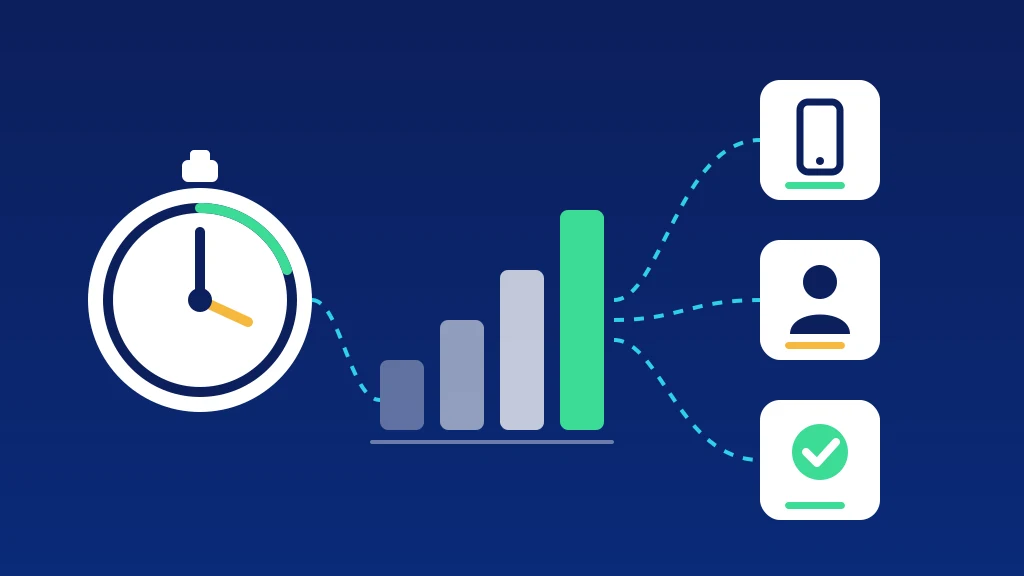
Short answer: How long do Google Ads take to work? The ads themselves start showing within days. Google's own systems settle in within about two weeks. But knowing whether ads make you money usually takes two to three months, a few rounds of changes, and one thing most people skip: following every lead all the way to a paying customer.
I'm writing this because of a real conversation with a real client.
He ran Local Services Ads with us for about two months. He got calls. Some of those calls became customers. On paper, the return looked good. And he still pulled the plug, because when he added up everything it cost his office, he was losing money.
He wasn't wrong. And we weren't wrong either. This post is about how both of those can be true, and what that means for how long you should give Google Ads before you decide.
The client who quit after two months
Here's what happened, without his name or anything that points to him.
He runs a local practice. His most valuable service is a high-ticket treatment, and that's the work he wanted more of. We set up Local Services Ads, the ads at the very top of Google with the "Google Verified" badge, where you pay per lead instead of per click.
Here's what the campaign did:
| What | Result |
|---|---|
| Phone calls | 18 |
| Leads Google charged for | 12 |
| Total lead spend | $569.84 |
| Average cost per charged lead | $47.49 |
| Calls we judged as qualified (people he could actually help) | 4 |
| Lead spend per qualified lead | $142.46 |
| New customers | 2, worth $1,600 in revenue |
Our first read: $1,600 back on $569.84 in ad spend is about 2.8 times your money. That's called return on ad spend, or ROAS. Most owners would take 2.8x all day.
Then he texted me his math, and it's the best lesson in this whole post:
- His office costs about $300 an hour to run, not counting his own pay.
- The consults took about $600 of office time.
- Doing the work took about $600 more.
- Ads plus our management came to about $1,000.
About $2,200 in, $1,600 back. Plus empty slots on his schedule when people didn't show, and time he could have spent on other paying work.
So is ROAS a lie? No. It's just one number. It tells you if the ad paid for itself. It doesn't tell you if the business made money. Those are different questions, and the second one takes longer to answer.
Was two months enough data?
Here's the part that surprised everyone when we dug in.
17 of the 18 calls came in the first five days.
In those five days, the ad was showing for general searches, the "near me" kind. That brought volume, but also a lot of calls for cheap, basic work he didn't want. So we turned off the setting that let the ad show on broad category searches and kept only his high-value service.
After that? One call in about two months. It was a great call, a qualified customer for exactly the work he wanted. But one call doesn't pay for anything. And raising the budget and widening the service area didn't change it.
So the honest answer to "is two months enough?" is: it wasn't really two months. It was five days of volume, then a narrow test with almost no traffic. The data said something real, though:
- General searches brought most of the calls, most of the junk and most of the good customers.
- Narrow targeting brought only good customers, but not enough of them.
- Local Services Ads have no setting in between. They're keywordless. Google matches you by service category and area,1 so you can't block words like "cheap" the way you can with regular search ads.
That's not a reason to say ads don't work. It's a reason to pick the right type of ad for the job. Which brings us to your options.
Your Google Ads options, in plain English
Google started selling ads in 2000 with a product called AdWords. In 2018 it was renamed Google Ads,2 and today it covers a lot more than search. Here's the family, explained like you'd explain it to a friend:
| Ad type | Where it shows | How you pay | Best for |
|---|---|---|---|
| Local Services Ads | Very top of Search and Maps, with a Google badge | Per lead (a call or message) | Local service businesses that want calls, not clicks |
| Search ads | Above and below the regular results | Per click | Control. You pick the exact words, and block the words you don't want |
| Performance Max | Search, Maps, YouTube, Gmail and other sites, chosen by Google's AI | Per click (mostly) | Businesses with good conversion tracking that want Google to find buyers |
| Display and Demand Gen | Websites, apps, YouTube, Gmail | Per click or per view | Getting seen and reminding past visitors |
| YouTube ads | Before and during videos | Per view or per click | Building trust with video |
| Shopping | Product listings with photos and prices | Per click | Selling products online |
Think of it like fishing. Local Services Ads are a net you drop in a busy spot. You pay for each fish that swims in, but you can't pick which fish. Search ads are a fishing rod. Slower to set up, but you choose the bait, the spot and which fish to throw back. Performance Max is hiring a fishing guide. Good guides are great, but you need to tell them which fish you actually want, or they'll bring you whatever's easiest to catch.
For a business that wants one specific kind of job, a rod (search ads with tight keywords and a block list) is usually the better tool than the net. That's exactly what we told our client.
How long do Google Ads take to work? A realistic timeline
Here's how I'd set expectations for a local business. The Google parts are Google's own guidance. The rest is my opinion from running campaigns.
Week 0: setup. Account, conversion tracking, call tracking, landing page. For Local Services Ads, add business verification, and that part can take a while depending on your category. Don't skip tracking. Every number later depends on it.
Days 1 to 14: the learning period. When you launch or make a big change, Google may show a "Learning" status. Google says that status never lasts more than 7 days, and that performance usually settles within one to two conversion cycles (the time from a click to a call or form).3 Your ads still run during this time. Just don't judge them yet.
Weeks 2 to 6: your first honest read. Google suggests judging performance over two conversion cycles or a two-week window, whichever is longer.3 For most local businesses, I'd look at a full month of leads, then follow each one forward. Did they book? Did they show? Did they buy?
Months 2 to 3: decide. By now you should know your cost per lead, your cost per booked appointment, and your cost per customer. That's enough to decide whether to scale it, fix it or stop it.
Months 3 to 6: the money question. For a lot of businesses, the first job is just the start. A customer who comes back, refers a friend or buys a bigger service later changes the math completely. If your customers are worth a lot over time, give it long enough to see it.
How many rounds of changes should you expect?
Plan on three or four rounds in the first 90 days. Here's why.
Every meaningful change needs time to show its effect. Google says to avoid making several target changes within a single conversion cycle unless there's a clear business reason.3 WordStream's benchmark report puts it more bluntly: most campaign changes take about 30 days to stick, so audit at least monthly.4
A good rhythm looks like this:
- Round 1 (week 2 to 4): Fix the obvious. Bad search terms, wrong areas, wrong hours, calls going unanswered.
- Round 2 (month 2): Fix the lead quality. Add blocked words, tighten services, improve the landing page.
- Round 3 (month 3): Fix the follow-up. Speed to lead, reminders, a script for the person answering the phone.
- Round 4: Scale what's working, or stop what isn't. With data, not a feeling.
Changing everything every week is like pulling up a plant to check the roots. It never gets the chance to grow.
What should you budget, and what does a click cost?
Here's what search ads cost on average in the US, based on more than 13,000 campaigns from April 2025 to March 2026:4
| Industry | Avg. cost per click | Avg. cost per lead |
|---|---|---|
| All industries | $5.42 | $66.69 |
| Home & home improvement | $8.33 | $90.92 |
| Attorneys & legal services | $9.87 | $131.63 |
| Physicians & surgeons | $4.76 | $40.04 |
| Dentists & dental services | $8.00 | $72.97 |
| Personal services | $7.17 | $54.60 |
Two things to remember about those numbers:
- A lead is not a customer. Our client's charged leads cost $47.49 each, which beats most of the table. His customers cost far more. Always do the math to the customer.
- You need enough leads to learn anything. If your lead costs $66.69 and you want 30 leads to judge a campaign, that's $2,000.70 in ad spend. A $300-a-month test can take half a year to tell you anything, which is why tiny budgets often "don't work." They just never get enough data.
My rule of thumb: budget for at least 20 to 30 leads in your first two months, and only take on as many as your team can actually answer.
The math nobody shows you: leads to customers
Our client's campaign, as a funnel:
18 calls → 4 qualified → 2 customers.
And here's another real one from the same practice. A different company ran Facebook ads for them: about $500 in ad spend over three weeks brought in 125 form leads. One person showed up.
That's the gap between a lead and a customer. Leads are easy to buy. Customers come from three things working together:
- The right people seeing the ad. People searching for what you do convert better than people scrolling. (Our client said the people from Google were far better than the ones from Facebook, and that's why.)
- A fast, persistent follow-up. More on that next.
- Knowing your real cost. Do the math our client did: ad spend, management, staff time, your time. Then compare it to what a customer is worth over time, not just on the first visit.
If you only measure the first visit, almost every channel looks like it loses money. If you never measure it, you can't tell the good channels from the bad ones.
Speed to lead changes your timeline
Here's a stat that should change how every business answers the phone. In research published in Harvard Business Review, companies that tried to contact a lead within an hour were about 7 times more likely to reach a decision maker than companies that waited longer, and 60 times more likely than those that waited a day or more.5 In the same research, 23% of companies never responded to an online lead at all.5
Our client's office was calling each lead once. That's normal. It's also why a lot of leads go nowhere.
Here's what I do in my own business. When someone asks for a website review, I follow up the next day, then two days later, then three days later. The fourth message says something like, "I get it, this isn't a priority right now. No worries, here's how to reach me." Almost every reply I've ever gotten comes on that fourth one. I don't love doing it. It works anyway.
Our client set up his own version: a call and text the same day, again on day two, and a polite close-out on day five. That one change can move your ads timeline more than any setting inside Google.
What's changing in 2027
A few things anyone running Google Ads should know going into 2027:
- Local Services Ads are moving into Google Ads. Starting in August 2026, Google began moving them into a special kind of Performance Max campaign with "pay-per-lead" goals. More categories follow in late 2026, and the rest in 2027.1 You still pay per lead, and the ads still show on Search and Maps.1
- Some controls are going away. After the move, manual bidding and manual lead disputes are no longer supported.1 Google also says to allow up to two weeks after the move for performance to settle.1 If your account migrates, don't judge it in week one.
- More AI, more automation. WordStream's 2026 report found the overall cost per lead went down for the first time in five years, and credits part of that to automated tools like Performance Max and AI Max.4
- Feed Google your real customers. The smartest advertisers now tell Google which leads became customers, not just which ones called, so the AI learns to find more of the good ones.4 If you take one technical step this year, make it this one.
If you're doing it yourself, here's what I would do
- Set up tracking before you spend a dollar. Calls, forms and, if you can, which leads became customers.
- Start with search ads for your best service, with tight keywords and a list of blocked words ("free," "cheap," "jobs," and anything you don't do).
- Send ads to a page about that one service, not your homepage.
- Budget for 20 to 30 leads over the first two months, sized to what your team can answer.
- Don't touch it for the first two weeks except to fix something broken.
- Answer every lead within an hour, and follow up at least three times.
- Make a simple sheet: lead, date, source, qualified (yes/no), booked, showed, bought, value. Fill it in every week.
- Judge it at 60 to 90 days on cost per customer and lifetime value, not cost per click.
- Try Local Services Ads if you want calls with less setup, but know you're trading control for simplicity.
Radical transparency: what we do
You knew it was coming.
We run Google Ads and Local Services Ads for local businesses. Local Services Ads management is a flat $250 a month (plus a one-time $1,500 setup, and your ad spend goes straight to Google). Full Google Ads management starts at $1,500 a month. We track leads, review call quality and send you the numbers.
Now the honest part. We control the ad. We don't control your phone. We can't make people show up, and we can't answer the call for you (though our AI Employee can help after hours). And ads stop the day you stop paying. That's why, for the client in this post, we actually recommended putting more into SEO instead of turning the ads back up. SEO grows something you own, and it doesn't flood the front desk overnight.
Paid ads are like renting a billboard on the busiest road in town. SEO is like buying the building. Both can work. Most businesses need to know which one they're doing, and why.
The bottom line
Google Ads work fast and judge slowly. You'll see clicks and calls in days. Google's systems settle in about two weeks. But the real answer, "is this making me money?", takes two to three months of clean data, a few rounds of changes, and honest math that follows every lead to a customer.
Your homework this week: pull your last 20 leads from any source and write next to each one: did they book, did they show, did they buy? That one sheet will tell you more than any dashboard. And if you want a second set of eyes, try our free SEO ROI calculator to compare what ads cost you against what showing up for free on Google could be worth.
Be kind to your future business. What's your online game plan?
Footnotes
-
Google Ads Help, "Local Services Ads transition to Performance Max campaigns with pay-per-lead goals", checked November 22, 2026. ↩ ↩2 ↩3 ↩4 ↩5
-
Google Ads Help, "Google AdWords is now Google Ads", and Google, "Introducing simpler brands and solutions for advertisers and publishers", June 27, 2018. ↩
-
Google Ads Help, "About Smart Bidding learning", checked November 22, 2026. ↩ ↩2 ↩3
-
WordStream by LocaliQ, "2026 Google Ads Benchmarks". Sample of 13,474 US search campaigns on Google Ads and Microsoft Ads, April 1, 2025 to March 31, 2026; figures are medians. ↩ ↩2 ↩3 ↩4
-
Harvard Business School Working Knowledge, "Why Business IT Innovation is so Difficult", summarizing Oldroyd, McElheran and Elkington, "The Short Life of Online Sales Leads," Harvard Business Review, March 2011 (2,241 US companies audited). ↩ ↩2
Pass it on
Know someone who needs this?
Send it to one business owner who’s been wrestling with this. The message is already written. It takes five seconds, and it might save them months.
Or share it on social
A caption, ready to paste
How Long Do Google Ads Take to Work? A 2027 Guide With Real Client Numbers A client quit Local Services Ads after two months. Here's what the data really said, how long Google Ads actually take, and how to do the math that matters. Worth the read 👇 https://jds1marketing.com/how-long-do-google-ads-take-to-work/
Tip: on LinkedIn, add one sentence of your own take above it. That’s what starts the conversation.
Keep reading
What's the Best Referral Networking Group? An Honest Guide From a Former BNI President
Networking built my business, then I quit it, then I came back. Here's what it really costs, who it works for, how to measure it, and how it fits next to SEO and ads.
Stop Paying Facebook to Find You Strangers (Real Numbers Inside)
We spent over $6,000 on Facebook ads and got either nobody or the wrong people. Here's what ads really cost in 2026, who they work for, and the referral plan we switched to.